Gallery
The project, in pictures.
Four ways of seeing the block: illustrative finished-tower renders, an AI-assisted reconstruction from dated demolition stills, the live construction cam, and the real frames documenting the build as it happens.
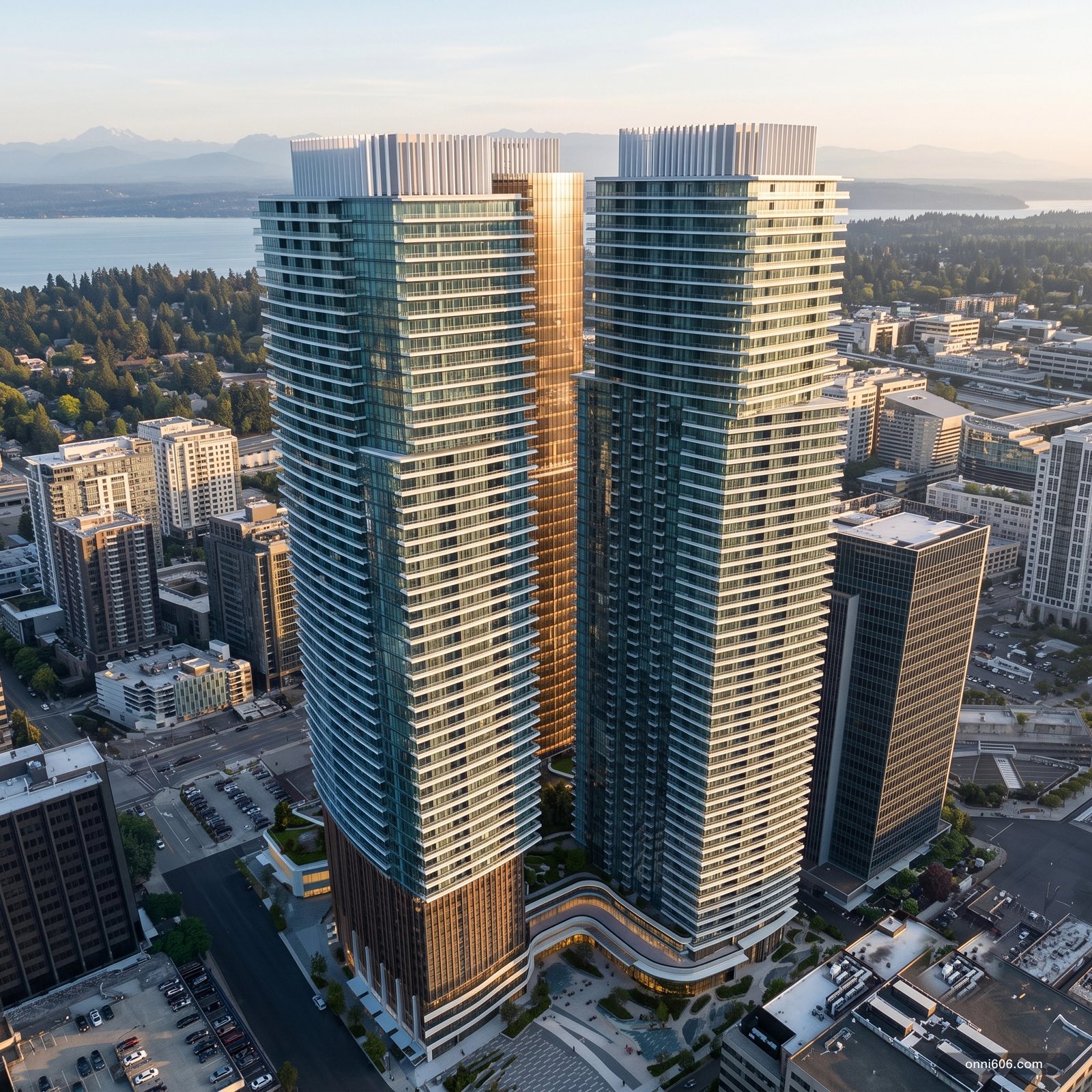
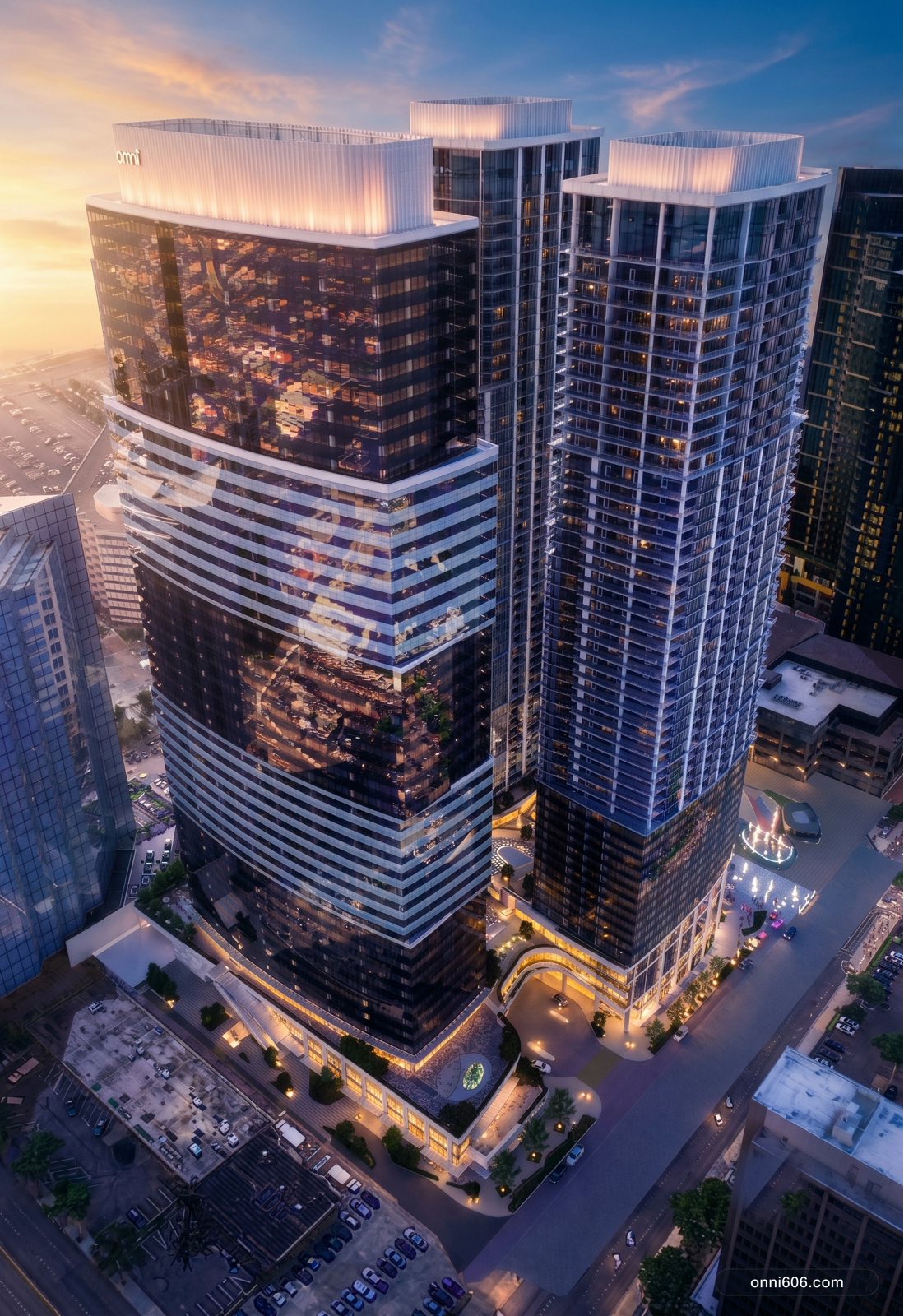
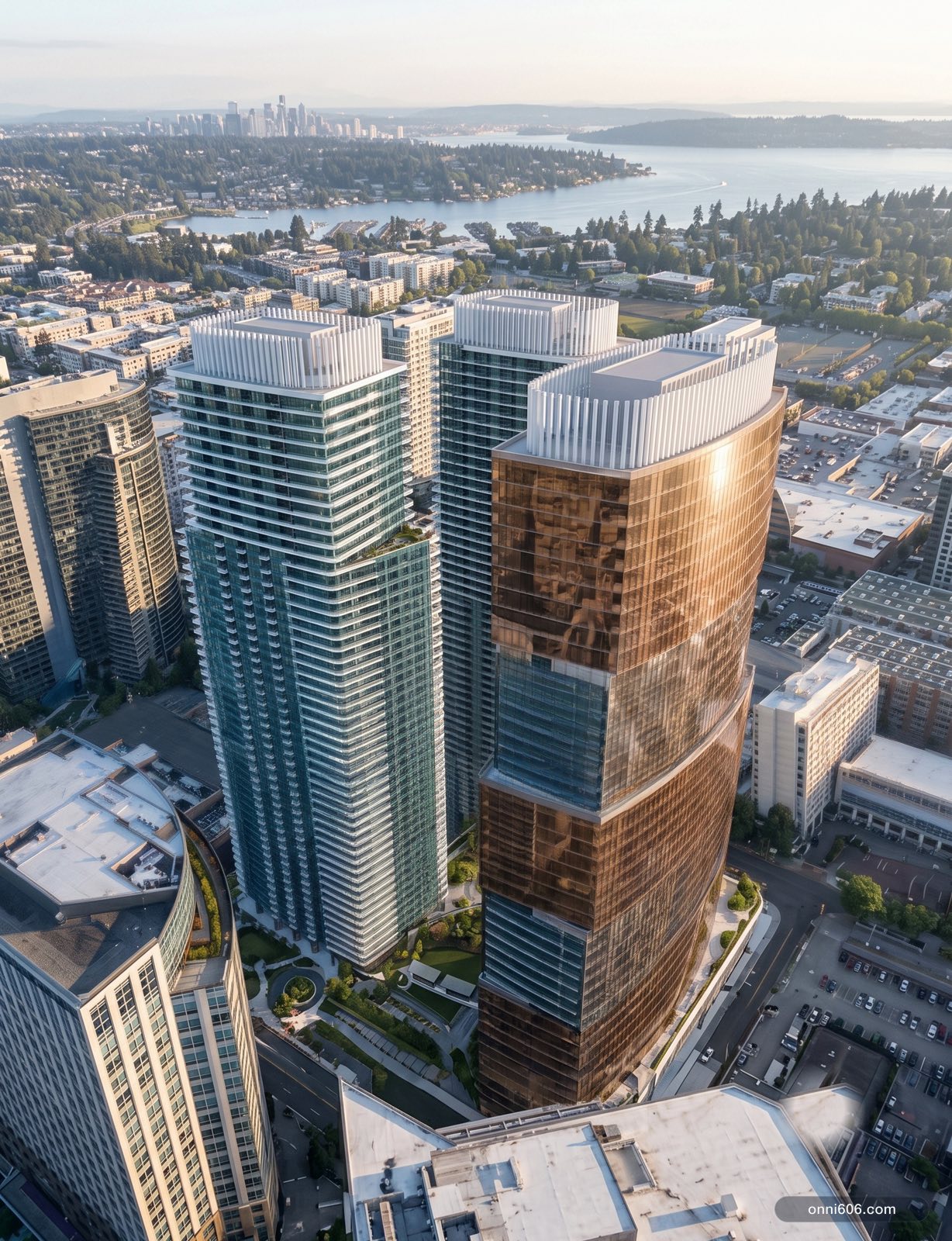
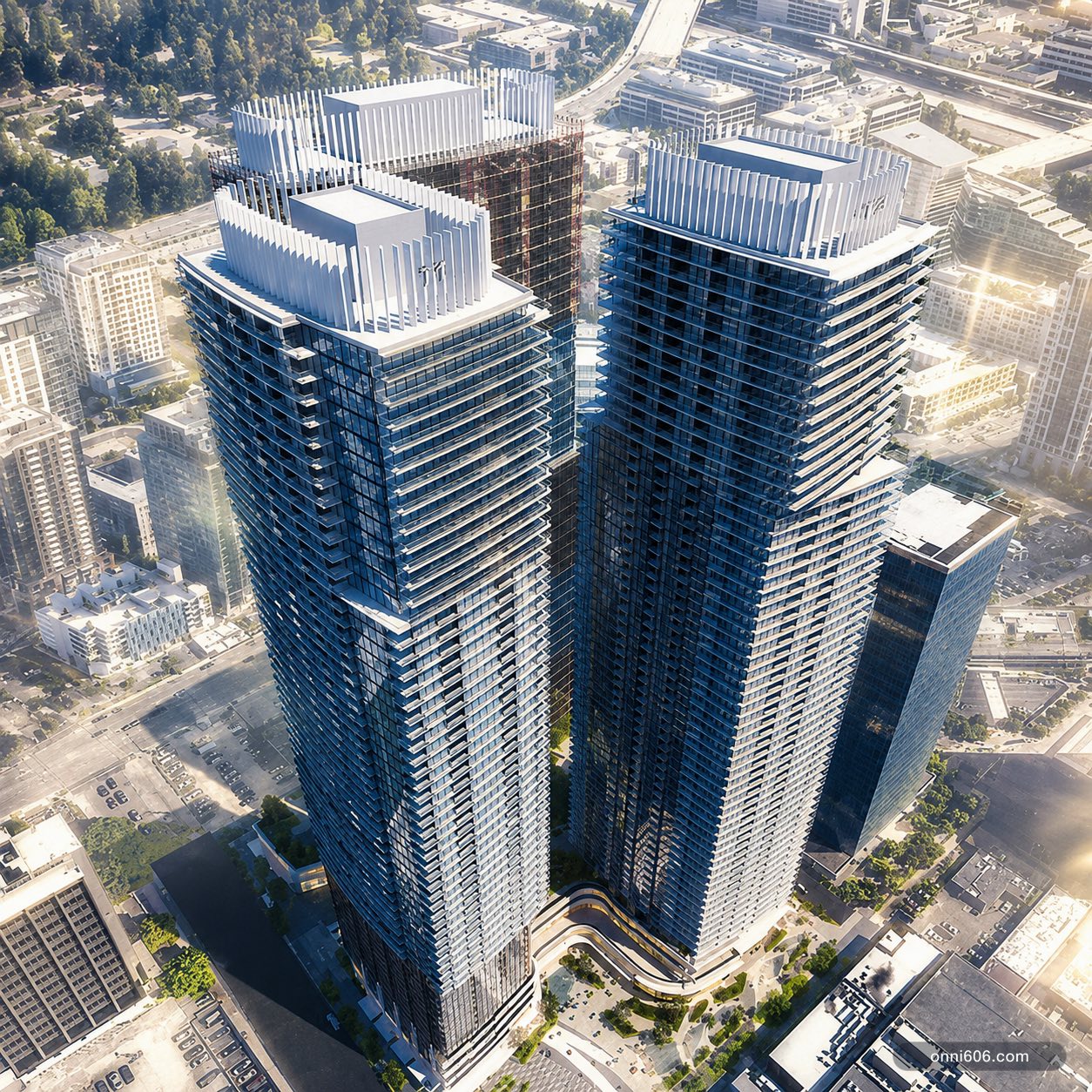
Artist's impressions
How it could look.
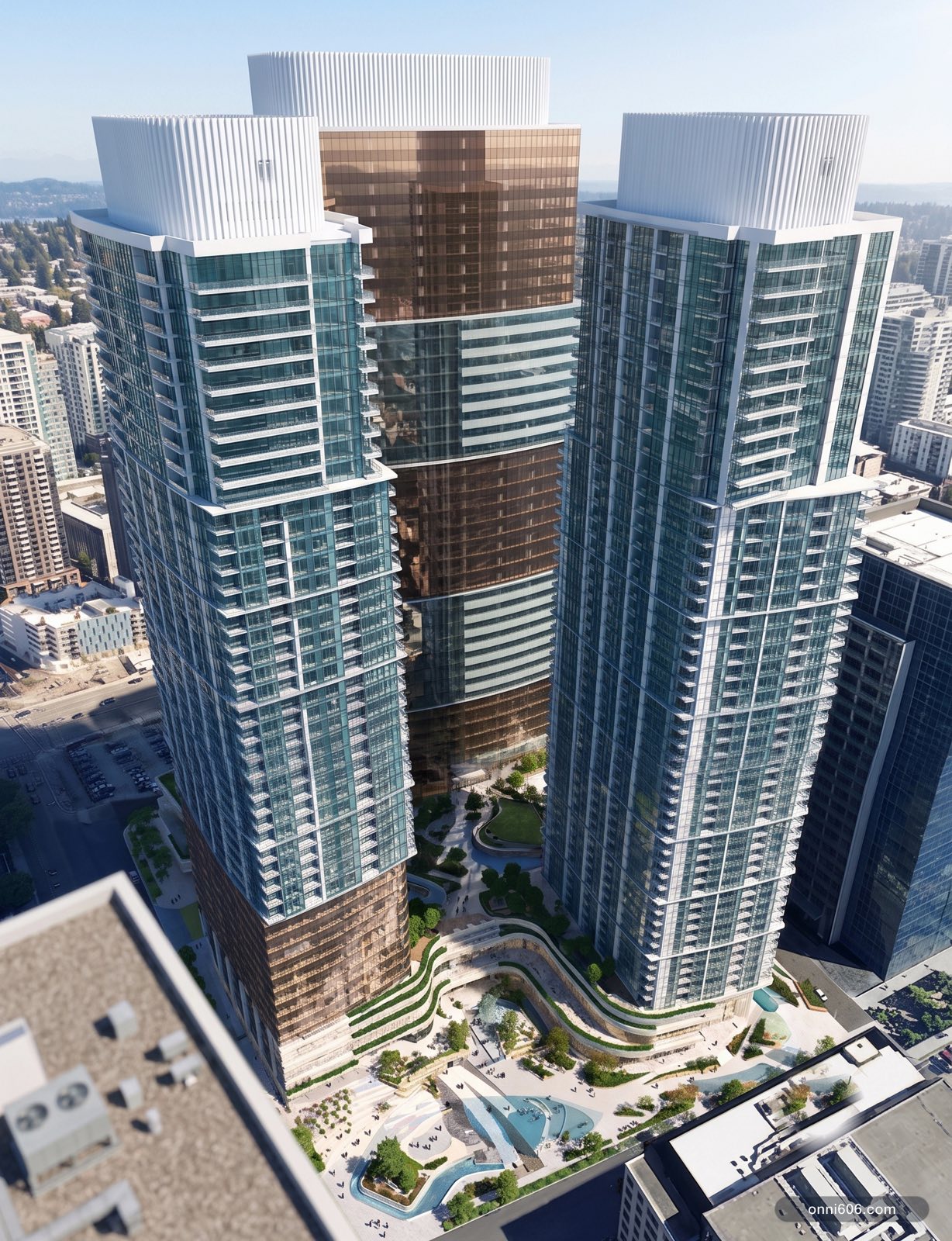
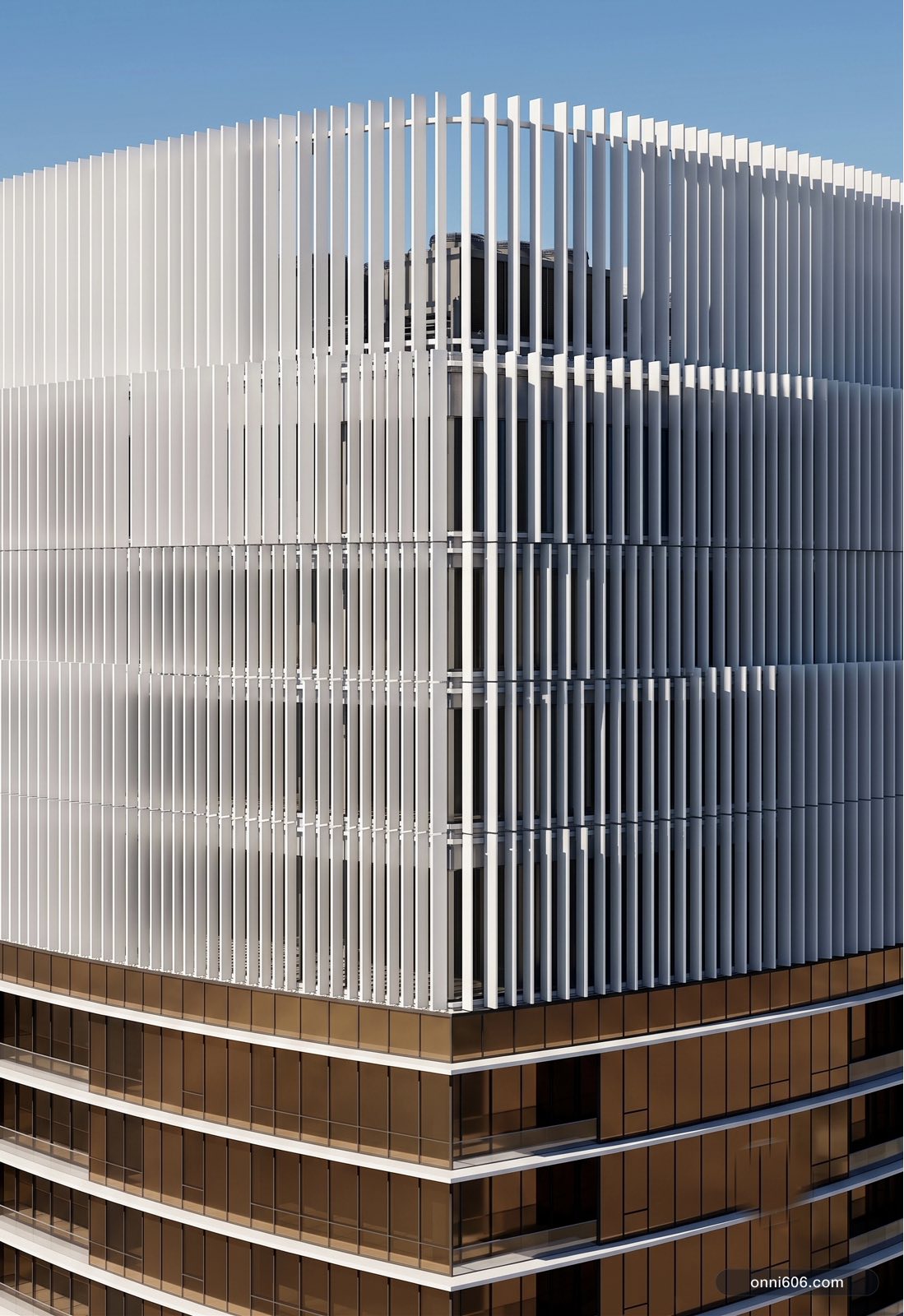
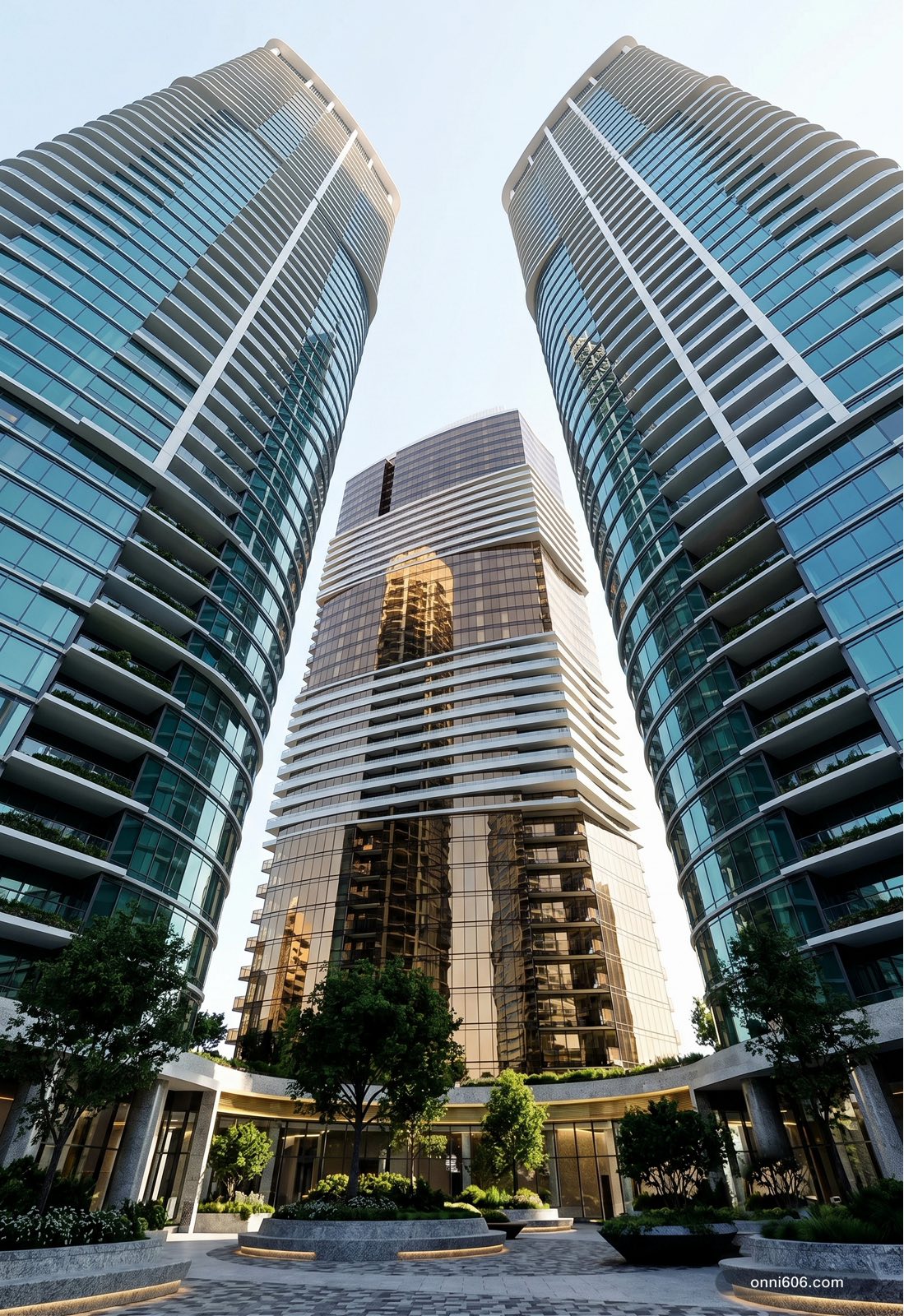
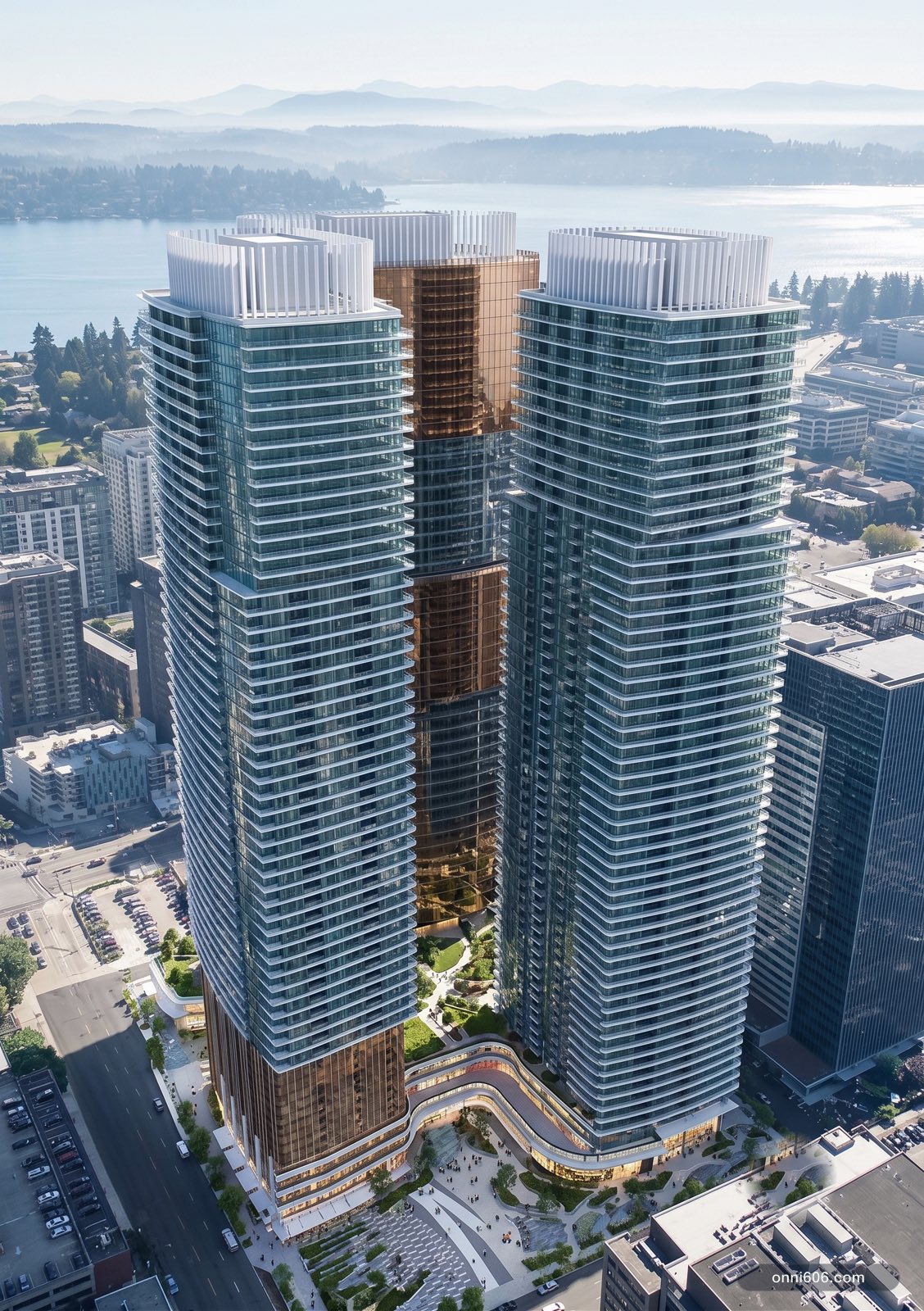
AI-generated renders built to match the approved massing, tower heights and materials — the two residential/hotel towers, the bowed bronze office 'lens,' the louver crowns and the podium plaza. Illustrative, not official Onni imagery, and from angles no camera can shoot yet.
Cinematic reconstruction
Nineteen days in fifteen seconds.
Four real construction-cam frames mark the verified states of the June 2026 teardown. Kling-generated motion bridges those frames; it is presented here as an illustrative reconstruction, never as documentary footage.
Live now
The site, as it is.
For the documentary record, this is the moving picture that matters: the 24/7 camera looking directly onto the block, with no generated motion and no reconstruction.
Documentary milestones
Six frames, six bounded claims.
These are real, dated captures rather than a future shot list. Each frame keeps its provenance, what the image can support, what it cannot support and the reporting that supplies the wider context.
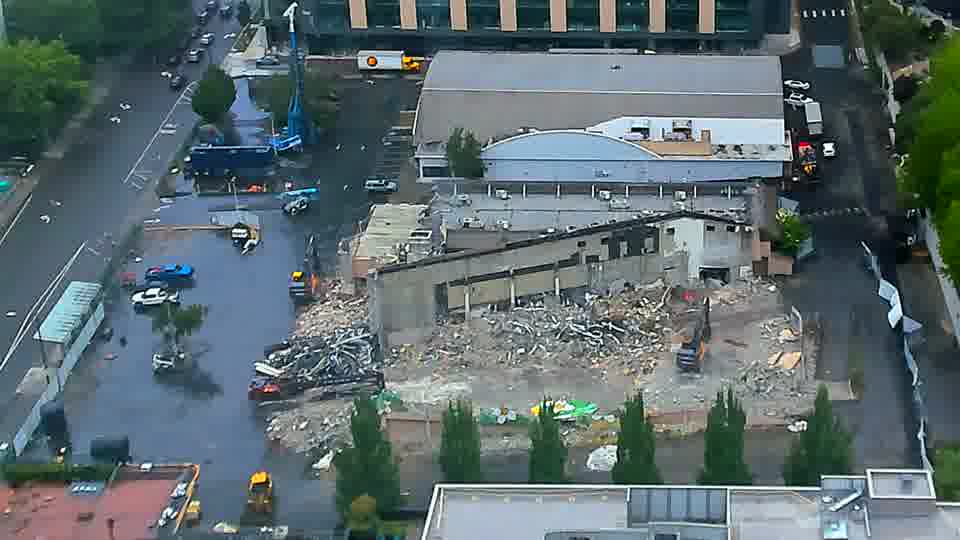 Open original ↗
- What it establishes
- Mechanical demolition was active and a large part of the southern low-rise structure had already been reduced to rubble while another building remained standing.
- What it cannot establish
- One frame cannot establish when demolition began, the sequence between captures or the exact permitted scope of work that day.
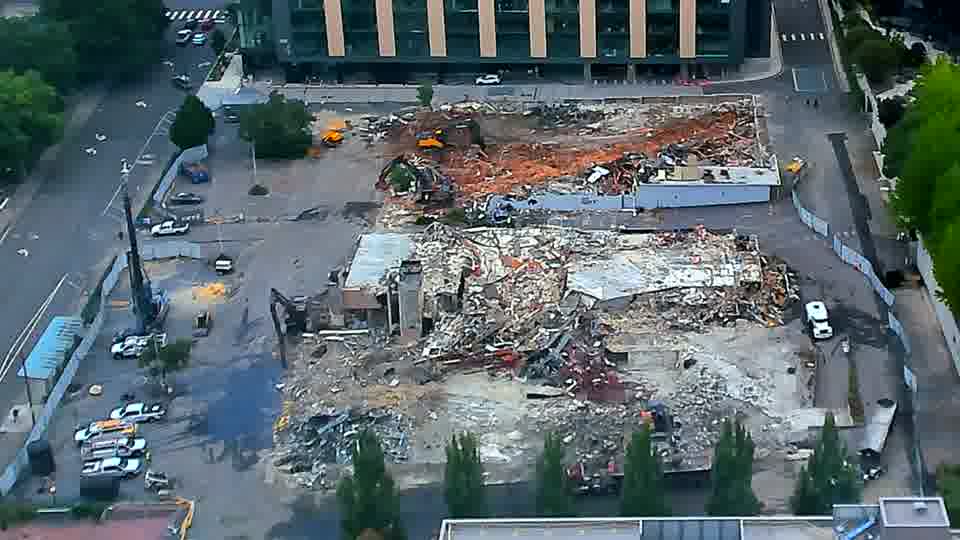 Open original ↗
- What it establishes
- Both principal low-rise buildings had been largely dismantled, with partial walls and roof sections still visible among the debris.
- What it cannot establish
- It does not establish final demolition completion, what material had left the site or activity outside the camera view.
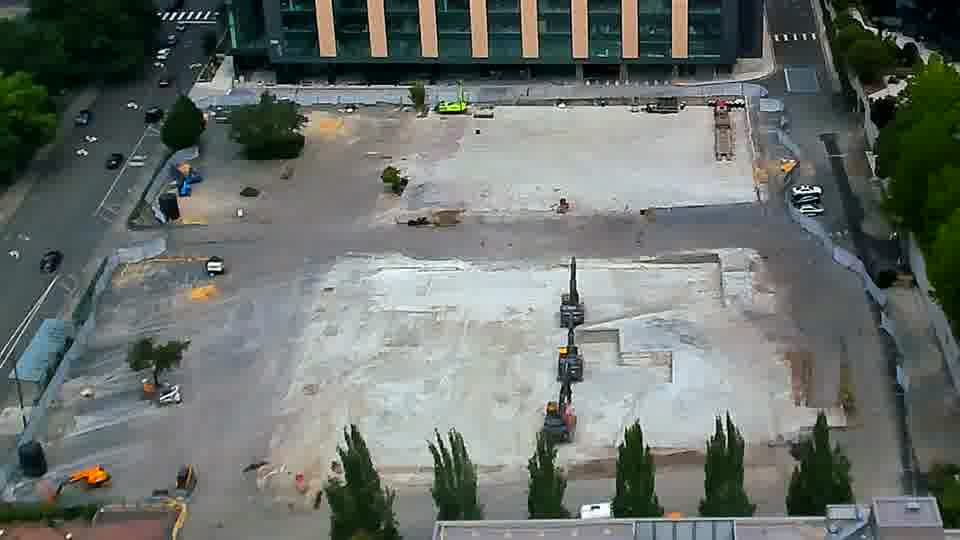 Open original ↗
- What it establishes
- The former above-grade buildings were no longer visible and most of the camera-facing block read as a cleared concrete slab.
- What it cannot establish
- A cleared surface does not prove subsurface removal, shoring, deep excavation or permission for a later construction phase.
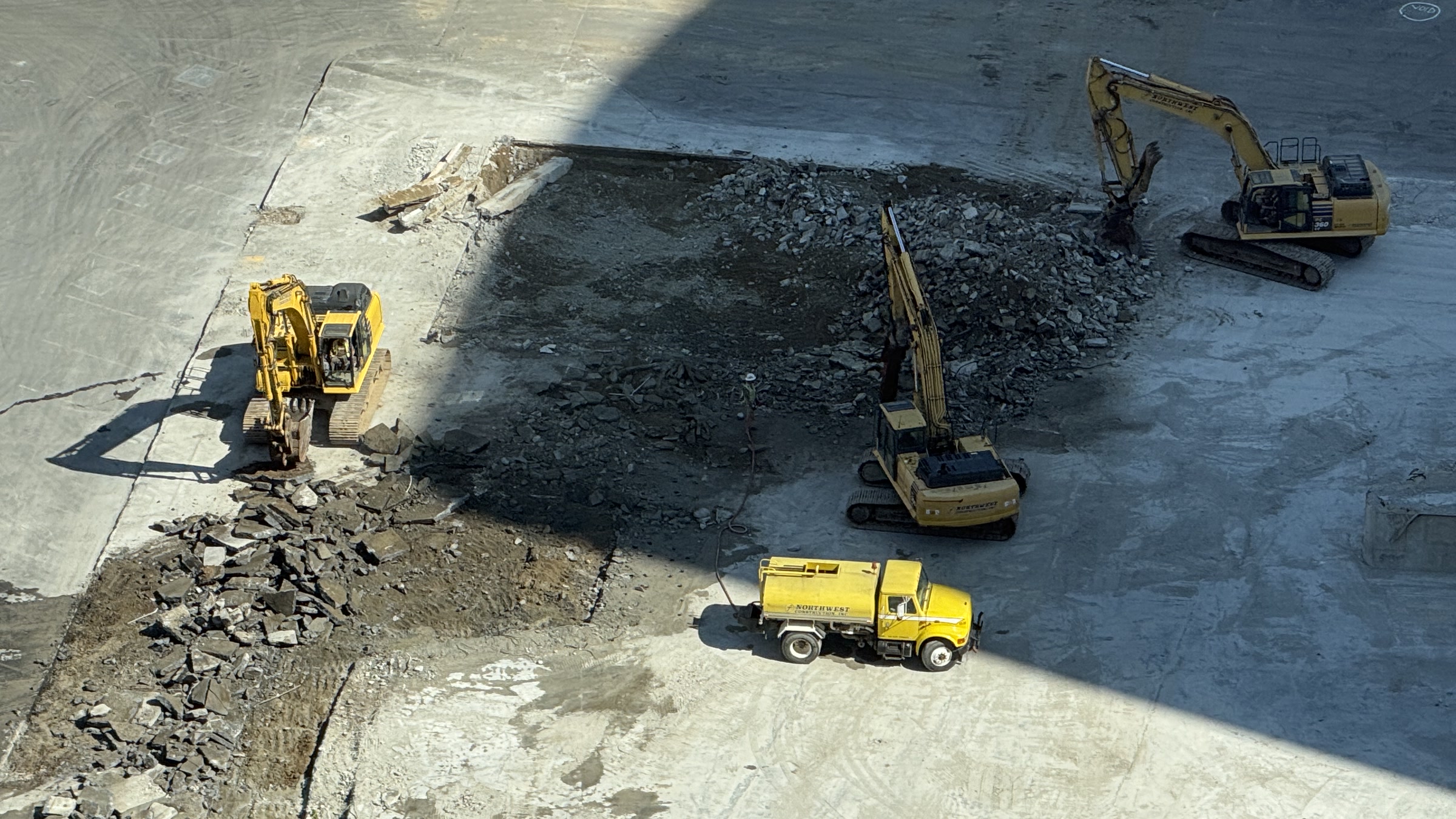 Open original ↗
- What it establishes
- Three excavators were positioned around a sharply bounded slab opening, with fractured material and a water truck visible.
- What it cannot establish
- A still image records equipment present, not whether every machine was moving; it cannot identify material volume or prove the full excavation had begun.
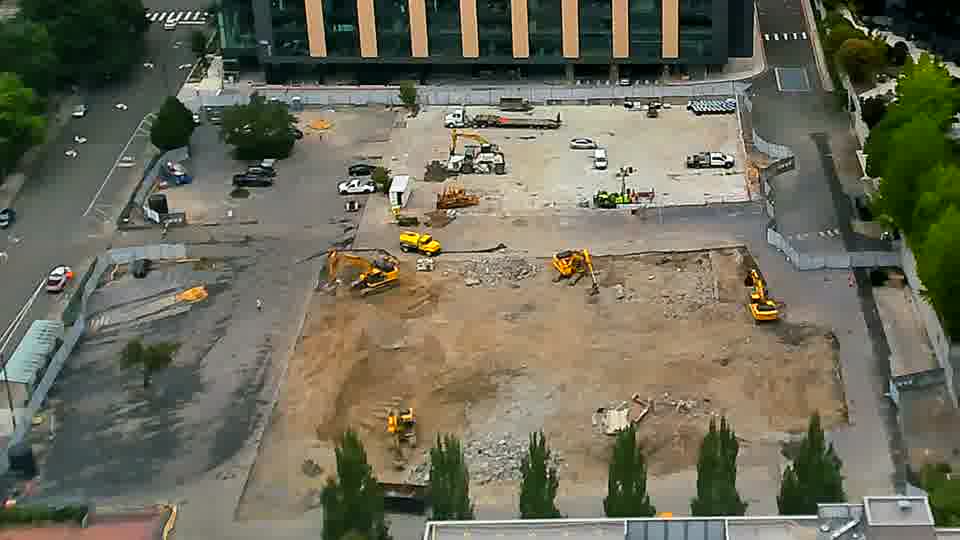 Open original ↗
- What it establishes
- A broad shallow cut, exposed soil and multiple excavators marked a visible move beyond surface-slab removal into early earthwork.
- What it cannot establish
- No perimeter shoring wall is visible; the frame does not establish release or start of the planned full-depth garage excavation.
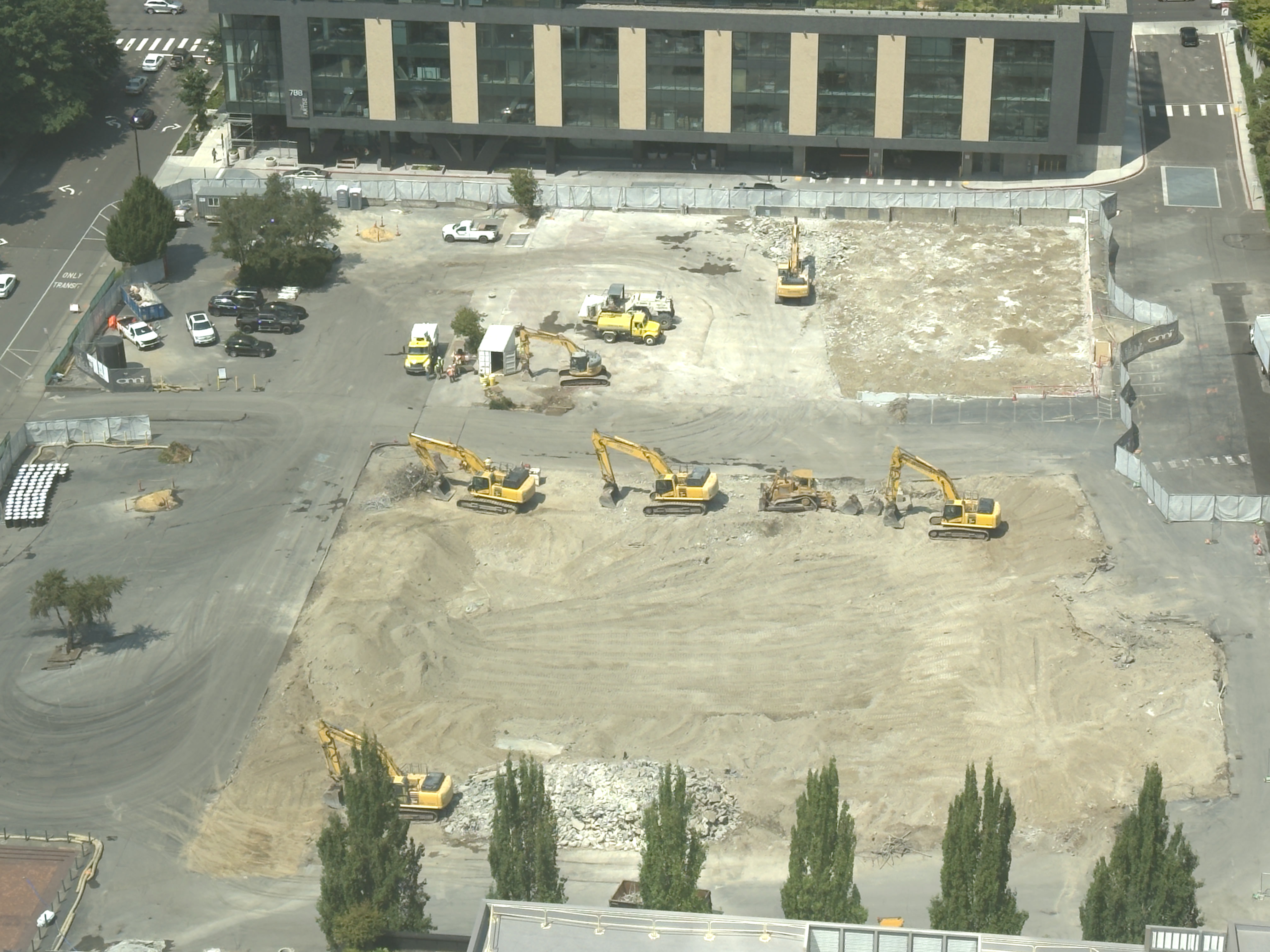 Open original ↗
- What it establishes
- Six excavators, a dozer and a water truck were visible across a much broader graded and exposed work area.
- What it cannot establish
- Different framing and resolution prevent a reliable area or volume calculation, and the still does not prove every machine was operating at that instant.
Have a construction photo of the block? We're building a public visual record of what local reporting has billed as Washington State's largest construction project. If you've shot the site — the fences, the excavation, a crane going up — send it and we'll credit you.
Keep exploring